
Search Virginia Court Records
Virginia court records are public documents that cover civil, criminal, traffic, and family cases heard across the state. The Circuit Courts and General District Courts each keep their own files, and many are available online through state-run portals. If you need to look up a case or get copies of court documents, this site covers where to search and what to expect. Use the search tool below to start, or browse by county or city to find local clerk contact info and access options.
Virginia Court Records Overview
How Virginia's Court System Works
Virginia courts are split into four levels. At the top sits the Supreme Court of Virginia, which is the final word on state law. Below that is the Court of Appeals, which reviews decisions from Circuit Courts. Then come the Circuit Courts, which are the main trial courts in the state. At the base are the District Courts, which handle smaller civil cases, traffic matters, and misdemeanor charges.
There are 120 Circuit Courts in Virginia, one for each county and independent city. Circuit Courts are courts of record. They handle civil claims over $4,500, all felony criminal cases, family law matters like divorce and custody, and appeals from the District Courts. The Clerk of Circuit Court is the official record keeper and maintains all case files, land records, probate documents, and marriage licenses. During a trial, the Clerk marks and admits every exhibit into the record and takes custody of physical evidence. That official record is what gets sent to higher courts when a case is appealed.
The Virginia Judicial System website at vacourts.gov is the central hub for court information. You can find contact info for every court in the state, access online case search tools, and get guidance on where to file different types of cases.
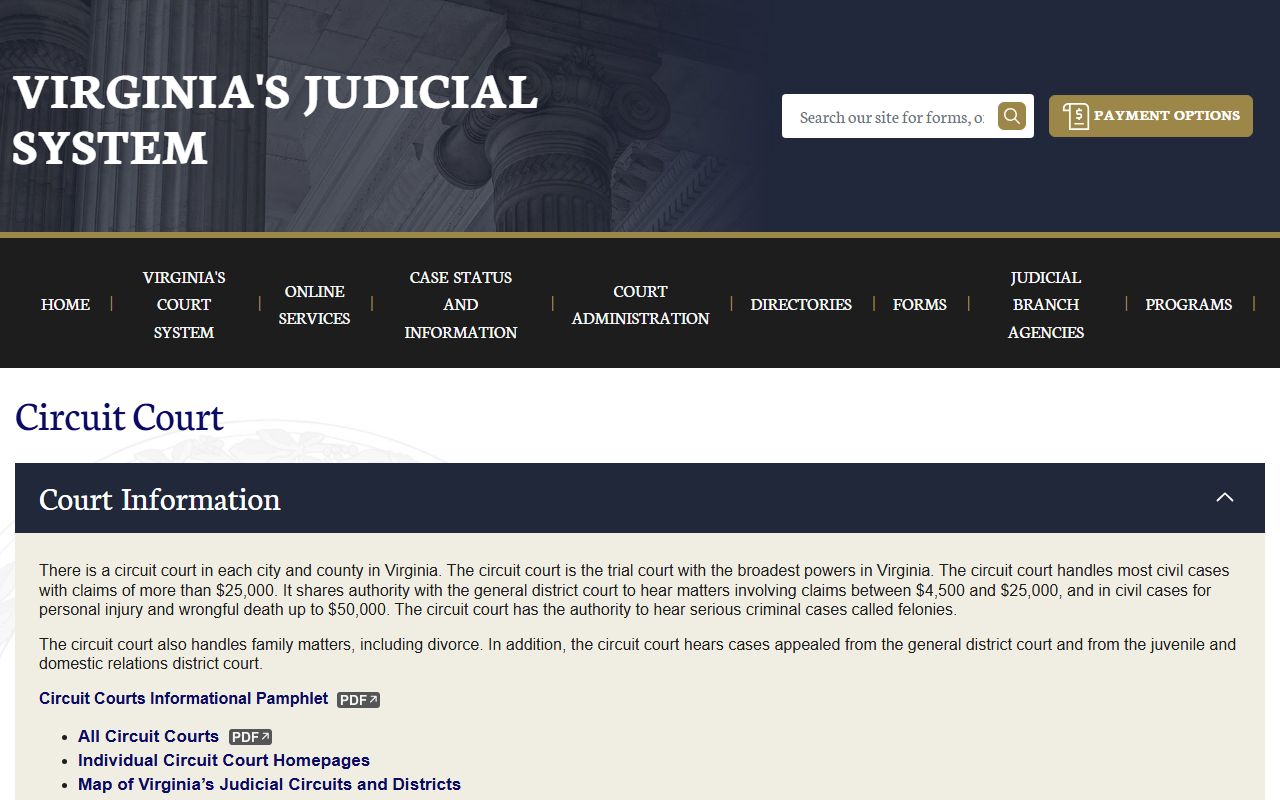
The Virginia Circuit Courts overview page on the official judiciary site lists all 120 circuit courts and explains their jurisdiction for civil, criminal, and family matters.
How to Search Virginia Court Records Online
Virginia gives you several ways to search court records from home. The tools are free, though the coverage varies. No single system covers all courts in the state, so you may need to try more than one depending on the case type and county.
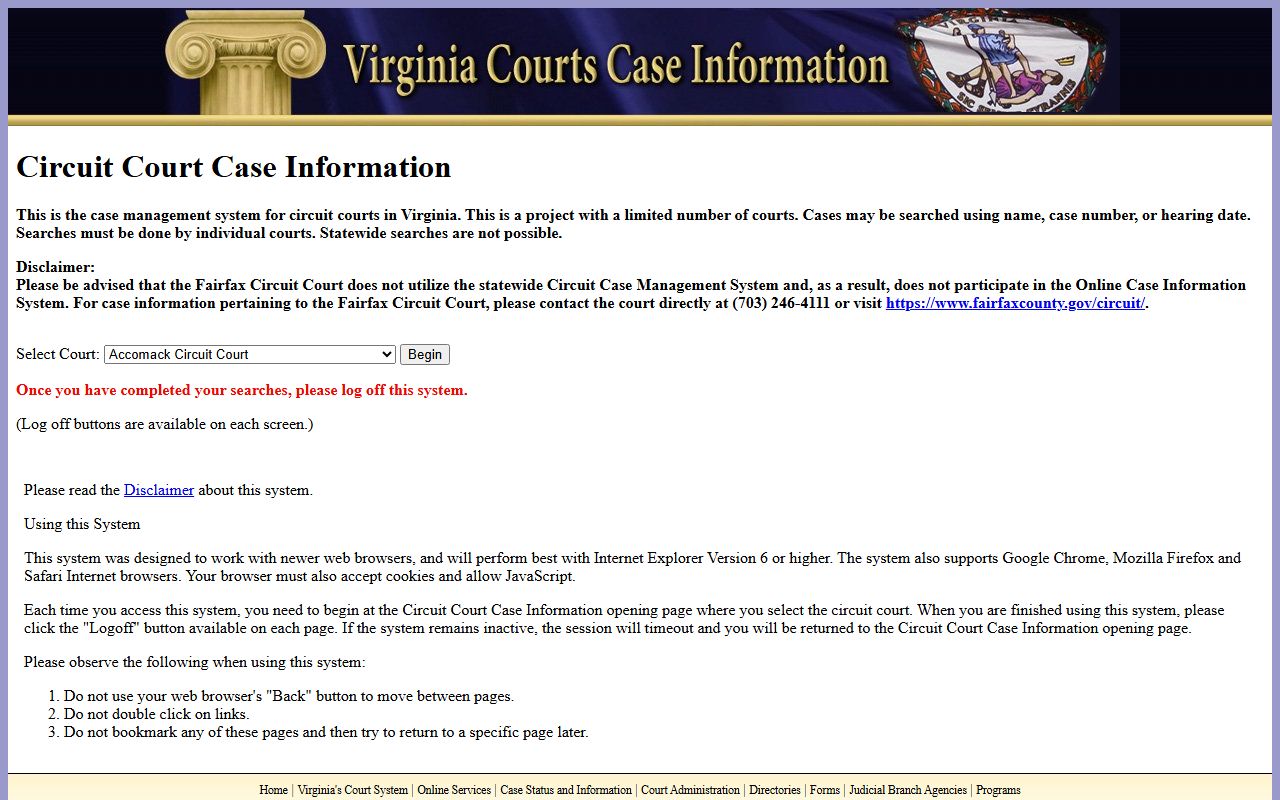
The Circuit Court Case Information System lets you search participating circuit courts by party name, case number, or hearing date. You pick the locality from a drop-down list and then search. The system is real-time, so you see current case status, pleadings, and service information. Case numbers for criminal cases use "CR" and civil cases use "CL". The "Pleadings/Orders" tab shows detailed document filings. The "Services" tab tracks how and when papers were served on parties. Not every circuit court has joined this system, but most larger counties have.
The Circuit Court Case Information System provides free online access to civil and criminal case data for participating Virginia circuit courts, searchable by name, case number, or date.
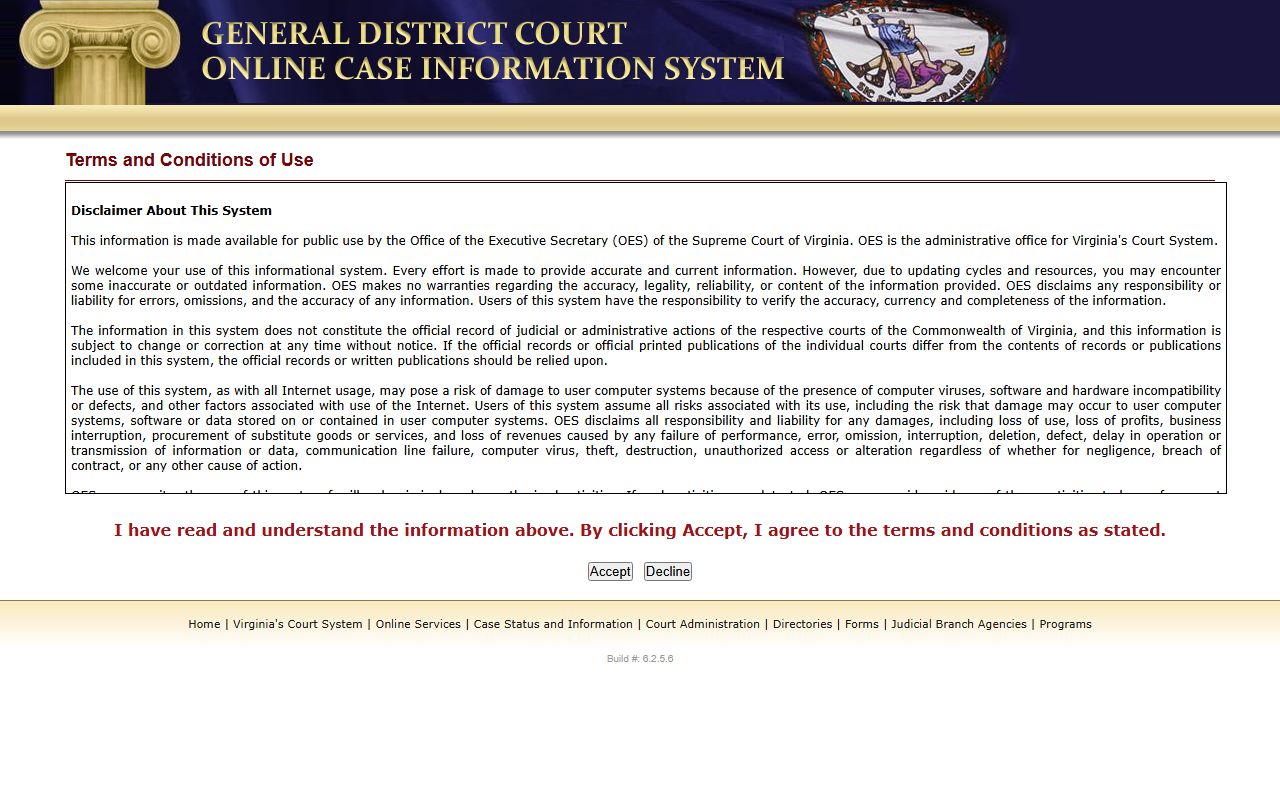
For General District Court cases, use the General District Court Online Case Information System. This tool covers criminal, traffic, and civil cases from district courts statewide. You can also pay certain prepayable fines online through this system. A check box in the "Pay" column marks which offenses are eligible. Note that prepaying a fine counts as an admission of guilt under Virginia law.
The General District Court Online Case Information portal gives statewide access to criminal, traffic, and civil cases filed in Virginia's district courts.
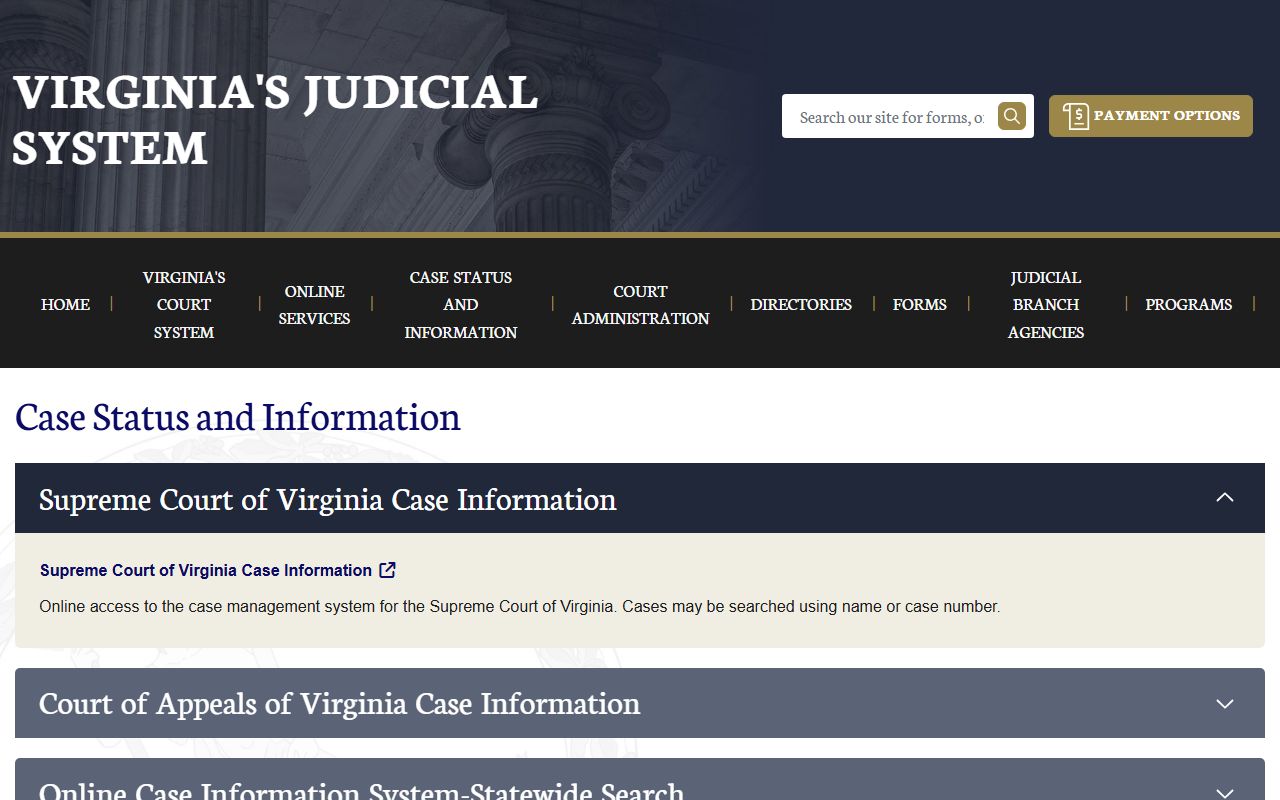
The Case Status and Information page ties these tools together. It provides links to both the circuit court and district court search systems, plus the Appellate Case Management System for Supreme Court and Court of Appeals cases. The system also offers a free Case Alert Subscription (CASS) service that sends text and email updates when a case in a participating court gets new activity.
The Virginia Case Status and Information portal is the starting point for most online court record searches, linking to all of the state's public case information systems.
Note: Juvenile and Domestic Relations District Court records are confidential by law. No online access is available for those cases, and the clerk's office cannot share that information without a court order.
Virginia Circuit Court Records
Circuit Court records are the most complete court files in Virginia. They cover a wide range of case types and go back many years in most counties. A circuit court file can include the original complaint or indictment, all motions and responses, financial disclosures, expert reports, court orders, and the final judgment. The Clerk of Circuit Court preserves all of this and must certify it as the official record if the case goes up on appeal.
Land records are also kept by the Clerk of Circuit Court in each county. These include deeds, mortgages, deeds of trust, easements, and plats. Most land records are not available through the Virginia Judicial System's online portal, but some counties have set up their own secure remote access systems. The Georgetown Law Library guide at guides.ll.georgetown.edu covers how to find Virginia circuit court trial orders going back to 1855, including resources available on Lexis, Westlaw, and Bloomberg Law.
Probate records, including wills, inventories, and estate settlements, are also held by the Circuit Court Clerk. Adoption files are sealed and require a court order to access. Records involving minors may also have restricted access depending on the type of case.
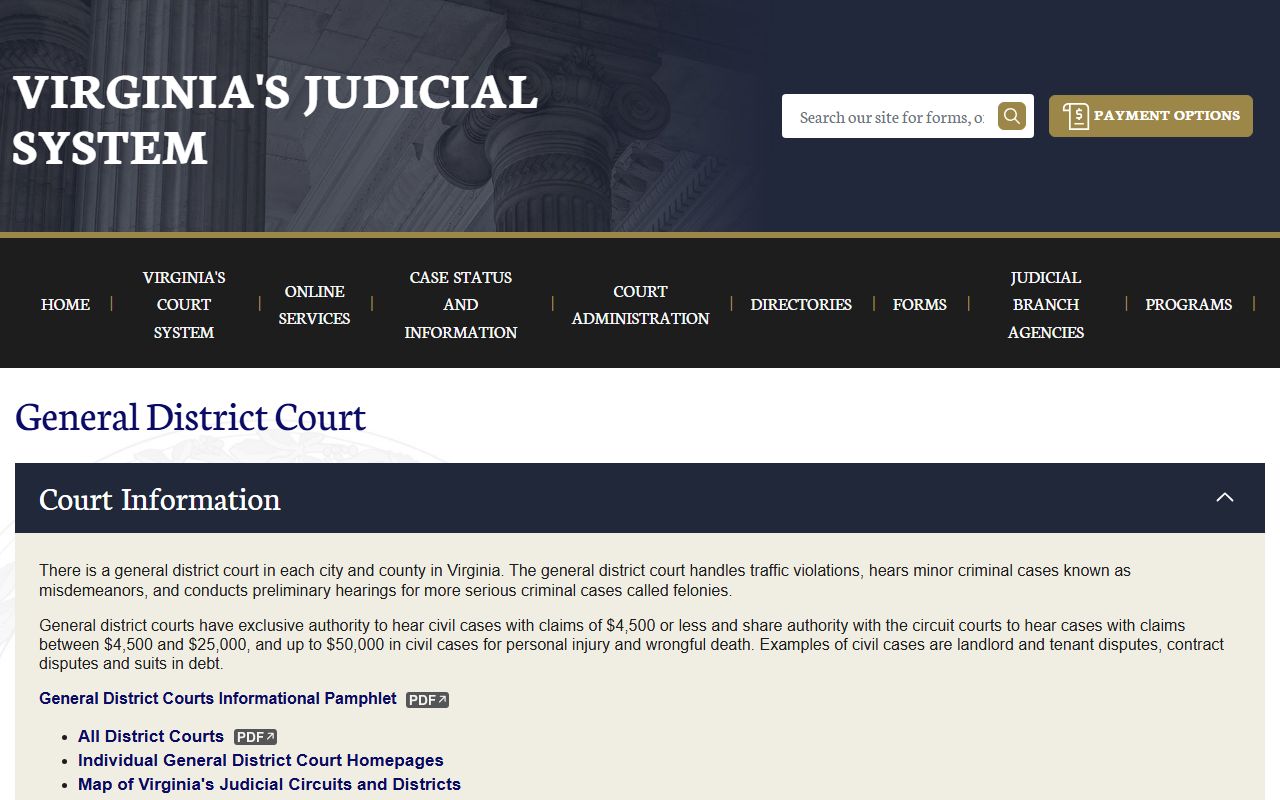
The General District Courts overview page explains the jurisdiction and case types handled by Virginia's district courts, including traffic, misdemeanor, and small civil claims.
General District Court Records in Virginia
General District Courts are trial courts of limited scope. They handle civil matters up to $25,000, traffic violations, misdemeanor criminal cases, and preliminary hearings for felony charges. Small claims cases involving $5,000 or less are also heard here. These courts exist in each Virginia judicial district, which may span more than one county or city.
If you lose a case in district court, you have ten days to file a notice of appeal to the Circuit Court. The circuit court then hears the case fresh, not just as a review of what the district court did.
What Virginia Court Records Contain
Court records differ based on the type of case. A civil court file might hold the complaint, the defendant's answer, motions, financial statements, expert reports, and the final judgment. A criminal case file can include the indictment or information, discovery materials, pre-trial motions, the verdict, and any sentencing orders. Family law cases in circuit court contain pleadings, financial disclosures, custody evaluations, and orders covering property, children, and support.
Virginia law under Va. Code Section 8.01-420.8 requires that filings in both circuit and district courts conceal personal identification numbers, showing only the last four digits of Social Security numbers and financial account numbers. This protects sensitive personal data while keeping the rest of the record public. Requesters can obtain aggregated case information from a court clerk or the Executive Secretary of the Supreme Court for research purposes, as long as it does not include personally identifiable information about the parties.
Common items found in court record files include:
- Pleadings (complaints, answers, counterclaims)
- Motions and responses
- Court orders and judgments
- Financial disclosures and affidavits
- Hearing dates and case status information
- Service of process details
- Sentencing records for criminal cases
Historical Virginia Supreme Court records dating back to 1923 are available through the Washington and Lee University Law School collection. Over 9,300 cases are represented in that archive through 2005.
The Virginia Supreme Court Records Collection at W&L Law contains PDF scans of official appellate documents from 1923 through 2005, covering more than 9,300 cases.
How to Get Copies of Court Records
To get copies of a court record in Virginia, contact the Clerk of Circuit Court or General District Court in the county or city where the case was filed. You can visit in person, call the clerk's office, or send a written request by mail. Most clerk offices are open Monday through Friday during regular business hours, though hours vary by location.
Copy fees are set by Virginia law. Plain copies cost $0.50 per page. Certified copies, which carry the court seal and clerk's signature, cost an additional $2.00 per document. Triple-seal copies, signed by both the Clerk and a Judge, carry an additional fee of $2.50. Mail requests should include the case number or year, the full names of all parties, and payment by certified check or money order. Some courts also accept credit and debit cards with a convenience fee. Call the specific clerk's office to confirm payment options before you send anything.
For Fairfax County specifically, the Clerk accepts mailed record requests. The Offsite Records Center at 2730 Prosperity Avenue, Suite 100, Merrifield, VA 22031 is open Monday through Friday, 8:00 AM to 4:00 PM, and can be reached at (703) 246-6656. Older probate records going back to 1742 are stored at the Historic Records Center.
Note: Some courts also allow requests by email. Contact the specific clerk's office to find out if that option is available in your county.
Public Access to Virginia Court Records
Most court records in Virginia are public under the Virginia Freedom of Information Act (FOIA), located at Va. Code §§ 2.2-3700 through 2.2-3714. The law says all public records are presumed open and can only be withheld if a specific statutory exemption applies. You do not have to give a reason for your request. The law requires a response within 5 business days.
Virginia is one of seven states that limits FOIA requests to state residents. The U.S. Supreme Court upheld this restriction in McBurney v. Young. Virginia also limits the right of incarcerated felons to request records. The National Freedom of Information Coalition's Virginia FOIA guide covers the full scope of what is exempt and what is open, including police reports, tax returns, medical records, and attorney-client protected materials.
Certain records are always closed. Sealed court records cannot be accessed without a court order from the judge who entered the sealing order. Adoption files are sealed by law. Juvenile and Domestic Relations Court records are fully confidential. Financial documents like tax returns and detailed asset statements may be restricted within otherwise public case files. Under Virginia's sealed records law, no fees are charged to the person who was arrested or charged if they file a motion to access their own sealed record.
The Virginia FOIA overview from the National Freedom of Information Coalition explains what records are open, what is exempt, and how to submit a proper public records request in Virginia.
For research into appellate court decisions, published Virginia Court of Appeals opinions from 1995 onward are available at law.justia.com. Unpublished opinions go back to 2002. Virginia Supreme Court cases have been documented since 1730 in official reporters and are available on Lexis and Westlaw.
The Virginia Court of Appeals published opinions on Justia covers decisions from 1995 to the present and includes docket numbers, case summaries, and links to full text opinions.
Georgetown Law's research guide at guides.ll.georgetown.edu is a strong resource if you need to track down historical Virginia court records. It covers Circuit Court trial orders back to 1855, where to find old Supreme Court of Appeals records from 1882, and which law libraries hold on-site collections.
The Georgetown Law Virginia court research guide provides a detailed breakdown of where to find historical court opinions, circuit court orders, and appellate records from multiple research databases.
Browse Virginia Court Records by County
Each Virginia county has a Circuit Court Clerk and a General District Court that keep local court records. Select a county below to find clerk contact information, office hours, courthouse address, and guidance on searching or getting copies of records in that area.
Court Records in Major Virginia Cities
Virginia's independent cities each have their own Circuit Court and General District Court. Pick a city below to find out where to go for court records in that area and who handles your case files.